MADAYAW INTERNATIONAL MULTIDISCIPLINARY RESEARCH CONFERENCE
- HOME
- MADAYAW INTERNATIONAL MULTIDISCIPLINARY RESEARCH CONFERENCE
- MADAYAW 6.0 UPDATES
RESEARCH PRESENTATIONS ROUND OFF MADAYAW 6.0
- August 18, 2023

The curtains draw to a close on an exhilarating and intellectually stimulating two-day event, the Madayaw International Multidisciplinary Research Conference, leaving attendees from all around brimming with new ideas, insights and connections.
Delegates from various institutions convened for the conference’s second day, which was defined by simultaneous oral presentations of studies in multiple disciplines.
The experiences of student and professional nurses became the theme of the presentations under the Business & Management and Social Sciences cluster, uncovering the many facets of the nursing profession.
From nurses working abroad to those who identify as members of the LGBTQ community, nurses from many walks of life were represented as their encounters, challenges and strengths were explored and illuminated in the studies.
Meanwhile, the second cluster of research presentations explored the motifs of environment, natural and physical sciences.
Various research endeavors encompassed a wide spectrum, ranging from eco-cultural tourism and sustainable reforestation to analyzing heavy metal content in shellfish and advancing upland rice production in the Philippines and much more.
Interposed between the video addresses were three distinct and equally thought-provoking open forum segments, during which the audience, predominantly comprised of esteemed professors and staff from San Pedro College, exhibited a high level of engagement, sharing a multitude of queries, insights, and recommendations for future researches.
In the third cluster, individuals and groups delved into the depth of health sciences wherein researchers shared their interventions and initiatives addressing a wide range of concerns, from canine rabies cases to ectoparasites of bats.
Subsequently, the prototype of paperfuge highlighted the session as the presenter showcased its function through a video presentation.
Dr. Rini Rachmawaty, MN, BSN, RN concluded the session by presenting her research titled “Exploring Patient’s Clinical Outcomes, Hospital Costs, and Satisfaction After the Implementation of Integrated Clinical Pathway-based Nursing Practice Model” in which she conveyed the difficulties faced by hospitals in Indonesia before and after implementing the nursing practice model.
On the other hand, presentations under the Arts, Language, Literature and Education cluster zeroed in on linguistic and pedagogical concerns.
Researchers looked into the various phenomena observed within the four walls of the classroom, seeking to find explanations and proposing recommendations to address issues.
Organized by San Pedro College’s Research Publication Innovation Center, Community Engagement and Extension Services and Internationalization and Linkages Office, the Madayaw International Multidisciplinary Research Conference is an annual forum which aims to facilitate research dissemination and communal development.
Its sixth installment was held last August 16 and 17, 2023 at the Philomene Labrecque Hall, and was attended by individuals from local, national and international institutions.
By Chelsea Jamias, Lorie Sugianto, Jhannah Aranaydo, Frances Cervantes, Tiara Diaz, Sheana Alegado, and Zyle Recalde of The Petroglyphs
MADAYAW 6.0 | MANAGING THE PEOPLE FOR THE PEOPLE
- August 18, 2023

Associate Professor in Nursing Management at Universitas Hassanudin, Rini Rachmawaty, PhD, MN, BSN, RN, delivered an informative lecture titled “Management Concepts, Theories of Management, and Nursing Management” to the student nurses of San Pedro College.
Delivering a comprehensive overview of essential principles, the session offered a valuable insight into the world of healthcare administration.
Her expertise on the said topic left the attendees inspired and equipped. In the end, the student nurses were able to share their ideas about implementing management theories into the clinical practice of leadership and nursing management.
Moreover, they were able to share their work immersion experience in identifying the gaps between management theory and the implementation at the clinical setting.
By Icey Claire Tocao, Tiara Diaz, Frances Cervantes, Sheana Alegado, and Zyle Recalde of The Petroglyphs
MADAYAW 6.0 | RESEARCHERS ENHANCING EDUCATION
- August 18, 2023
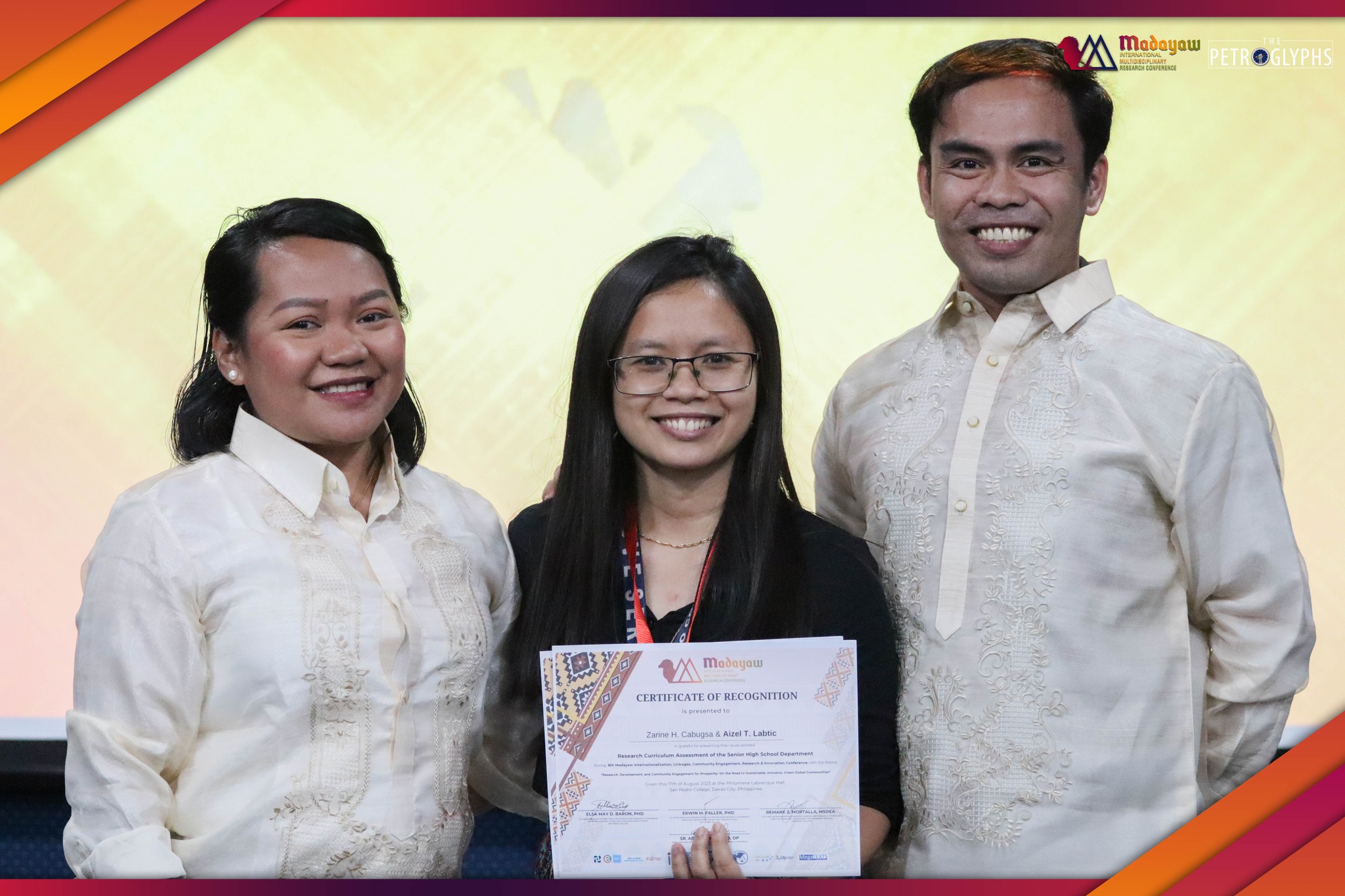
Under the Language, Arts, Literature, Education, and Social Sciences cluster, researchers from local, national and international institutions discussed experiences and ways to improve the quality of education for Filipinos.
One of the papers presented aimed to study insect terminologies by the Bogobo-Tagabawa tribe to conserve knowledge and pass it to the younger generation.
The paper by Jenny Hernan from the University of Mindanao – Bansalan College, titled “Uncovering Ethnoentomological Knowledge: A Semantic Analysis of Hyponyms of Insects in Bagobo Language,” further investigated the tribe’s connection with insects and how it influenced their culture and practices.
Another study that was presented was “Predicting Academic Buoyancy of College Freshmen through the Resilience Scale for Filipino Adolescents” by Bealaura Angela C.Bencio of Philippine Science High School – Southern Mindanao Campus and Moira Monina V. Dumagan of Mapúa Malayan Colleges Mindanao.
The researchers sought to assess the capabilities of students in handling academic challenges.
This research spiked many questions during the open forum segment. One asked how the results of this study could be applied in real-life situations, to which Bencio replied, “[According to] The results of the study, guidance counselor or guidance advocates alike can create programs to promote self-efficacy for their students. And with physical resources naman, kumain kayo nang maayos, kumain nang maaga.”
[[According to] The results of study, guidance counselor[s] or guidance advocates alike can create programs to promote self-efficacy for their students. And with physical resources, you should eat proper meals and eat early.]
Another study that tackled students’ academic performances is titled “Program Choice and Academic Performance of BSN Students,” which aimed to identify the correlation between the students’ academic performance and the factors that influence their course choice.
Other papers under the cluster were of the same essence, wherein they investigated how to enhance the comfort of students and their academics and how institutions could further improve their services.
By Yzabela Ducay, Tiara Diaz, Frances Cervantes, Sheana Alegado, and Zyle Recalde of The Petroglyphs
MADAYAW 6.0 | EXPLORING HEALTH SCIENCES
- August 18, 2023


Focusing their lens on health sciences, various researchers presented their interventions and initiatives that aim to address specific concerns posed in the health and medicine field.
In the category of clinical studies, proponents from the Medical Laboratory Science Department of San Pedro College successfully exhibited their fourteenth version of paperfuge prototype which became the highlight of the first batch of presentations.
To further explore the third cluster, studies concerning rabies cases, sugarcane bagasse, carbon quantum dots, ectoparasites and traditional plants were also presented in the conference.
Concluding the discussion of health sciences, Dr. Rini Rachmawaty, MN, BSN, RN showcased her exploration on patient’s clinical outcomes, hospital costs and satisfaction wherein she shared the circumstances present in hospitals situated in Indonesia.
The parallel session ended with a sharing of insights by participants from different countries and regions, who gathered to contribute in building a stepping stone toward the betterment of the field of health sciences.
By Jhannah Aranaydo, Tiara Diaz, Frances Cervantes, Sheana Alegado, and Zyle Recalde of The Petroglyphs
MADAYAW 6.0 | BENEFICIAL ENVIRONMENTAL CHANGE
- August 18, 2023
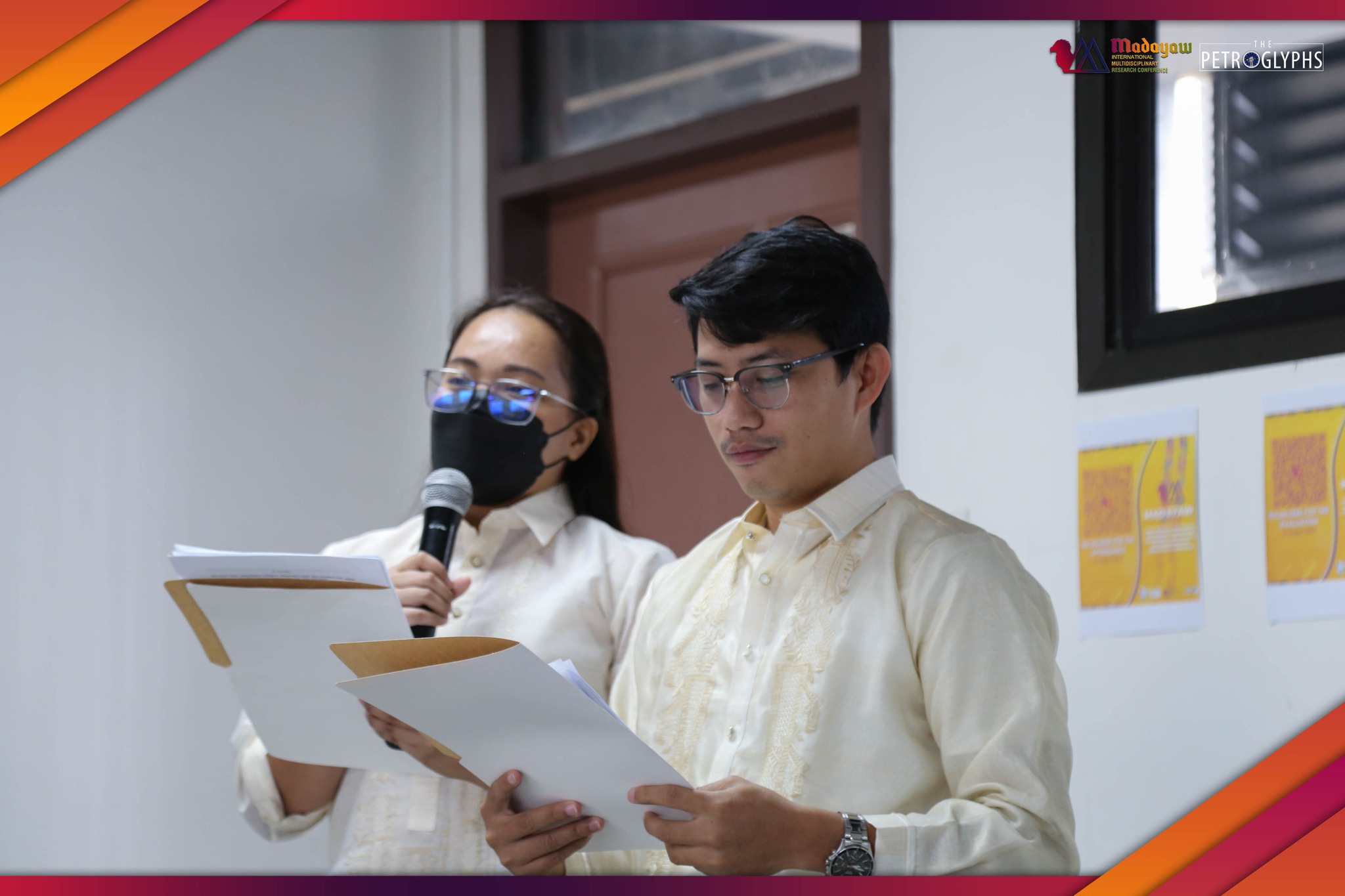
Intricate interplay between the environment, the natural world and the fundamental principles of the physical sciences were discussed during the Environment, Natural and Physical Sciences cluster’s presentations.
A diverse congregation of scholars, experts and thought leaders from different universities converged to share their groundbreaking findings, engage in thought-provoking discussions and forge collaborations that hold the promise of pushing the boundaries of knowledge in their respective fields relating to the biosphere.
From the elegant symposium on marine macroinvertebrate diversity, sustainable reforestation, to the enthralling panel discussions on heavy metal content in shellfish, every facet of the natural and physical world was meticulously examined.
In the open forums, the researchers talked about their collaborations with different departments of the Philippine government and spoke highly of the communities they worked with, hoping that their studies would be of benefit to them.
With that, they concluded the session which served as a dynamic platform where the boundaries of knowledge were stretched, unconventional ideas were nurtured, and the seeds of collaboration were sown.
By Lorie Sugianto, Tiara Diaz, Frances Cervantes, Sheana Alegado, and Zyle Recalde of The Petroglyphs
MADAYAW 6.0 | THE MANY FACETS OF NURSING
- August 18, 2023

The experiences of student and professional nurses became the subject of the five studies that were presented during the oral parallel session of the Business & Management and Social Sciences clusters.
By examining their obstacles and challenges, the said studies unraveled the various phenomena and situations nurses face in both school and hospital settings.
The first presenters delved into the gender bias encountered by male nurses in their workplace, amplifying their voices in a predominantly female profession.
On the other hand, another study spotlighted nurses who identify as members of the LGBTQ community as “rainbows in the sickroom,” standing resolute and optimistic amidst the hustle and bustle in classroom and clinical settings.
Meanwhile, Filipino nurses overseas were also illuminated, as the third presenters took a closer look at the factors affecting their financial, social, emotional, mental, physical and spiritual well-being.
International student nurses were also represented, as another research group investigated their experiences with regards to patient interactions and classroom learning, uncovering the hurdles brought about by cultural differences.
Lastly, student nurses’ academic performance was examined through the lenses of their self-concept.
By Chelsea Jamias, Tiara Diaz, Frances Cervantes, Sheana Alegado, and Zyle Recalde of The Petroglyphs,
MADAYAW LIVES UP TO MULTIDISCIPLINARY GOAL
- August 16, 2023

Filled to the brim with profound information, the second half of Madayaw 6.0’s first day consisted of six plenary sessions with themes such as food security, clinical education, community-based tourism, social services, and fiscal management.
EATING ATTENTIVELY, LIVING SAFELY
With food safety being a significant concern in the Philippines, Hon. Dr. Peter Faistauer, Consulate of the Republic of Austria-Davao City Philippines, conveyed his expertise in food security.
He began by explaining the Philippines’ plan of action for food safety, which is deeply rooted in seven factors: regulatory framework, capacity building, risk assessment, improving communication, surveillance and monitoring, public awareness, and international collaboration.
However, Dr. Faistauer pointed out that food safety in the country is still a significant concern despite various efforts.
He stressed that issues arose from improper execution of the Philippines’ rules and regulations for food security, leaving room for “empty spaces” like food scandals.
In addition, he articulated that the attempts of the government are not enough if individuals, especially children, are not conscious of what they are eating.
“What do I put into my mouth and swallow?” he asked.
Wrapping up his impartation of expertise, he reminded the attendees that food security should not make people scared of eating. Rather, eating with attentiveness will be the gateway to a balanced and healthy diet.
DEVELOPING COMPASSIONATE CARE
Live from Thailand, Dr. Pimrat Boonyapuk, Dean of the School of Nursing at Mae La Fung, Thailand, then spoke about clinical nursing education within the context of Thailand.
She cited issues observed from the previous nursing curriculum: insufficiency of communication skills, critical thinking skills, leadership skills, a lack of clinical experience and the time it takes to transition from novice to skilled nursing.
Recommending ways to lift the standard in clinical nursing education, Dr. Boonyapuk also suggested five solutions that entail responding to stakeholders’ needs, developing an outcome-based curriculum, focusing on both generic and specific learning outcomes, fixating on transformative learning by integrating life-long learning and technology.
As she ended her speech, she emphasized that the key aspect of nursing revolves around compassionate care.
INTERLACING TRADITION AND TECHNOLOGY
Adding to the list of exemplary speakers, the dean of the San Pedro College’s School of Nursing, Dr. Sarah Bernadette L. Baleña, expounded the “remarkable journey” of clinical nursing education in the Philippines.
Dr. Baleña established three stages that clinical nursing education in the Philippines underwent: pre-COVID-19, during COVID-19 and the post-pandemic periods.
Prior to the pandemic, the clinical nursing education predominantly employed outcome- and clinical-based learning.
After the outbreak of the virus, all clinical placements halted and the necessity for curricula modification arose due to social isolation.
The use of technology like virtual simulations emerged from the abrupt shift to online learning.
In addition, as not all nursing students have access to medical-grade equipment, common household items were used as simulation tools to perform nursing procedures.
Of what was once thought of as a temporary addition in response to the pandemic, technology became “permanent fixtures” in the nursing curriculum in the post-COVID-19 period.
Hands-on learning resumed, creating a balance between technology and tradition.
However, the presence of various challenges persisted as there was a noticeable lack of clinical placements and instructors.
Despite that, clinical nursing education in the country seized the advantages brought about by technology whilst fostering the traditions of nursing.
GREEN TOURISM, SUSTAINING HERITAGE
Speaking about the radical change sustainable development has to offer, Ass. Prof. Dr. Aala Abukhalifeh graced the conference attendees with her online presence all the way from South Korea.
Dividing her speech into three parts: opportunities and threats, managing visitor impacts, and green certification, she was able to tackle the importance and benefits of sustainable tourism as she compared it to conventional tourism.
Dr. Abukhalifeh pointed out that green tourism advocates indigenous-oriented plans that focus on educational experiences, cultural diversity, protection, preservation, community-strengthening and foreign exchange earnings.
After imparting the pivotal information, she ended her speech with a solidified intent that aims to change the way how tourism is being implemented.
PEACEFUL, BEAUTIFUL, BOUNTIFUL MINDANAO
Dr. Adrian Tamayo, the chief of the Public Relations Division of the Mindanao Development Authority (MinDA), burst with pride as he divulged about Mindanao’s value.
He first commenced his speech with the story of Mindanao, and its large contribution to agriculture and fisheries “technically providing food for the nation” in the middle of the pandemic.
In accordance with the priority programs of MinDA’s chairperson Secretary Maria Belen Acosta, Dr. Tamayo emphasized that Mindanao should not be compared to its neighboring islands, Luzon and Cebu, but rather perceived as the “peaceful, beautiful, and bountiful Mindanao.”
Moving forward, he introduced the continuous contributions of MinDA in opening the path for Mindanao’s new era of “peace that generated prosperity.”
MinDA’s efforts, like their tactical and strategic remedy to the 2010 rotating brownouts, were grounded on the people of Mindanao and their welfare.
He further stated that they center around improving the community’s standard of living and establishing a connection to social services.
Before closing his lecture, Dr. Tamayo commended research conferences for providing an avenue for the government agencies like MinDA in disseminating proof of their tangible efforts in raising the people’s quality of life.
He concluded by quoting Secretary Acosta’s words, “Let’s make it happen in Mindanao. Make it Mindanao.”
INVESTING ON SUSTAINABLE GROWTH
Continuing the discussion about the Philippines, Robert Mariano, Director of Research Service, imparted his knowledge pertaining to fiscal management.
He began by explaining the inner workings of factors related to the country’s financial obligations, talking about how the pandemic caused a ballooning of national debt.
Stating that during the low-generating years, the government needed to give more support to its citizens despite the sunken revenues.
Mr. Mariano then spoke about debt management where he emphasized three main points: it starts with prudent fiscal management, strategic borrowing to minimize cost and risks, and proactive debt management.
At the end of his presentation, he then talked about the importance of a country’s debt-to-GDP ratio wherein one has to look at the acceleration of growth rather than the accumulation of debt.
He also stated how the government plans to achieve prosperity and foster growth, and in order to actualize that plan, spending was required as an investment.
“Not how much you borrow but how you borrow,” he said.
Concluding the first day of the conference, winners of poster making contest were announced by Mr. Remark Mortalla: Environment, Natural and Physical Sciences – UP Mindanao’s “Soil Physico-chemical Properties and Growth of Potted Black Rice Applied with Fertilizers;” Social Sciences – San Pedro College’s “Rainbow in the Sickroom: Unveiling the Lived Experiences of Lesbian, Gay, Bisexual, Transgender and Queer (LGBTQ) Student Nurses;” Health and Medicine – UP Mindanao’s “A Five-Year Emerging Hotspot Analysis of Canine Rabies Cases in Davao City, Philippines;” and Arts, Language, Literature and Education – Davao del Norte State College’s “Self-Regulation and Learning Outputs of Davao del Norte MOOC Learners.”
By Mae Antonia Davide, Maya Bettina Nuenay, Jhannah Aranaydo, Tiara Eren Diaz, Frances Cervantes, and Zyle Khian Recalde of The Petroglyphs
RPIC, CEES, INTERLINK LAUNCH MADAYAW 6.0
- August 16, 2023
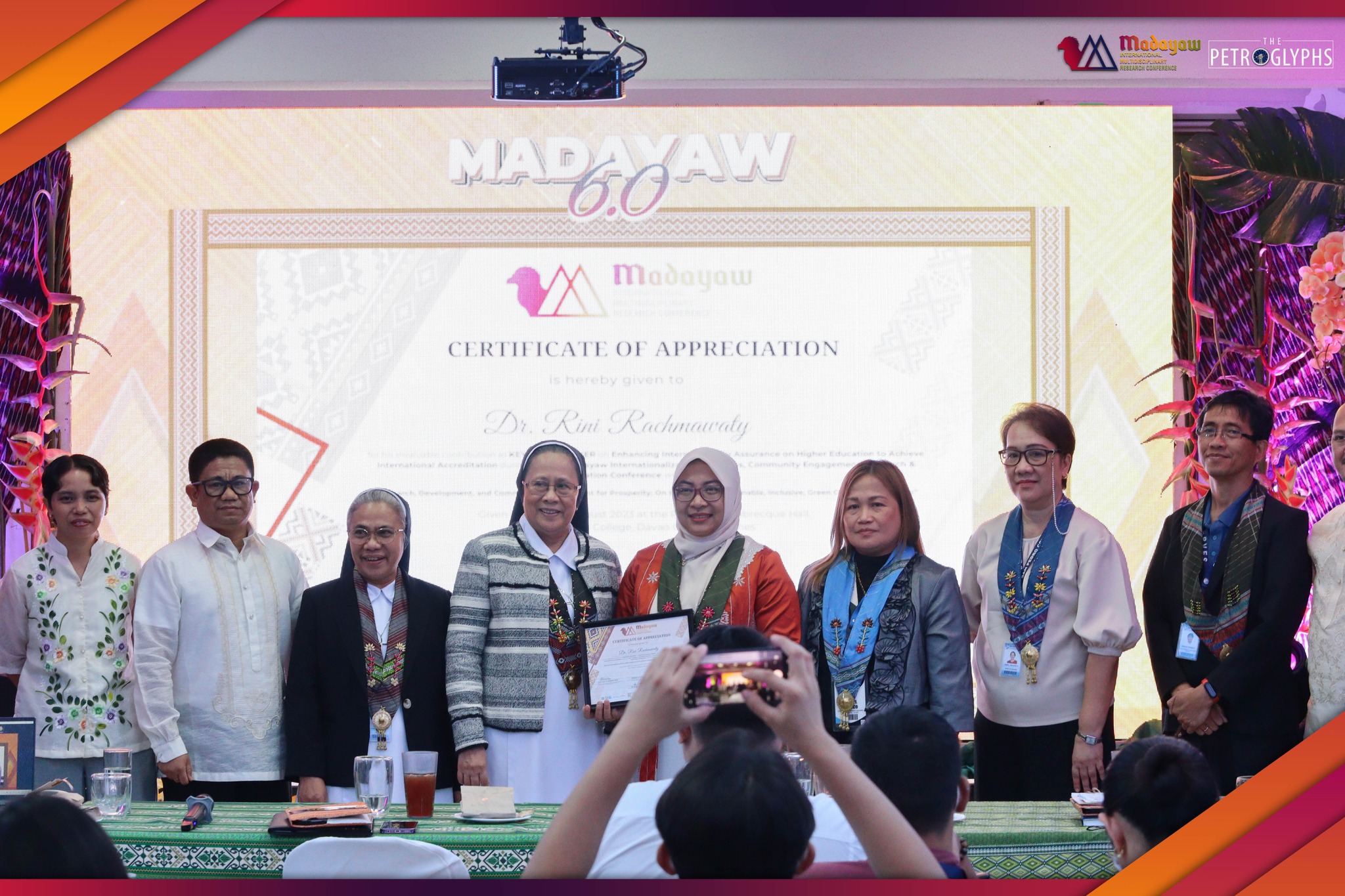
Laying the sixth stepping stone toward innovation and progress, San Pedro College’s Research Publication Innovation Center opened this year’s Madayaw International Multidisciplinary Research Conference, with the theme “Research, Development, and Community Engagement for Prosperity: On the Road to Sustainable, Inclusive, Green Global Communities.”
The two-day research forum kicked off with the ceremonial ribbon cutting and keynote messages from two invited speakers at the Philomene Labrecque Hall, Wednesday.
TRANSCENDING DISCIPLINARY AND LINGUISTIC BARRIERS
Dr. Bernardo Sepeda, the Executive Director of the National Research Council of the Philippines (NRCP), commenced his discussion by restating the four reasons for conducting research: to satisfy curiosity, to generate explanations, to make sense of experiences and to achieve a better future.
“Hindi ho hadlang ang wika sa pananaliksik,” he said.
[Language does not hinder research.]
In relation to his introductory topic, Dr. Sepeda stressed the significance of practicing one’s native language in researching, instead of giving superiority to the English language.
Although progress is being made through innovative research, Dr. Sepada shed light upon the setbacks of the current research-conduction methods.
Furthermore, he discussed the importance of transdisciplinary research and stated that in creating such studies, the inclusion of the whole community is a must.
Dr. Sepada recommended that there should be a collaboration with all stakeholders from the research inception itself, and in strengthening the audience’s will to partake in collaborative research, he promoted the Harmonized National Research and Development Agenda.
Ending his speech, Dr. Sepada planted four seeds in the minds of the attendees: simplify science, go to the community, be human and live out the Ubuntu principle.
“The future is not something that we turn over to our children but it is something that we borrowed from them and hopefully, we return it with a better one,” he said.
INTEGRATING RESEARCH AND PRACTICE
Adding to the insightful information, Dr. Rini Rachmawaty, PhD, MN, BSN, RN, the secretary of the Institution of Quality Assurance and Educational Development at Universitas Hasanuddin, Indonesia, shared her knowledge with a main theme of Enhancing Internal Quality Assurance on Higher Education to Achieve International Accreditation.
Speaking about their institution’s efforts to live up to the predetermined standards, commitment to research allowed them to gain international accreditation.
Indonesia’s principles in education is grounded on the three Dharmas which consist of Teaching, Research and Community Service.
Fulfilling the aforementioned Dharmas, it is compulsory for lecturers to publish a research paper once a year as their way of contributing to the betterment of the community.
Concluding her talk, she commended the similarities between the University of Hasanuddin and San Pedro College with their initiative for outcome-based education.
The Madayaw International Multidisciplinary Research Conference is an annual research forum intended to facilitate research dissemination, transcending boundaries between disciplines.
This year, delegates from four international and 32 national institutions were in attendance.
By Mae Antonia Davide, Maya Bettina Nuenay, Tiara Eren Diaz, Frances Cervantes, and Zyle Khian Recalde of The Petroglyphs

- 12 C. Guzman St., Davao City, 8000, Davao del Sur, Philippines
- spc@spcdavao.edu.ph
- (082) 221-0634 / 224-1481
- www.spcdavao.edu.ph

SAN PEDRO COLLEGE - Visitors

Copyright © 2025 San Pedro College, All Rights Reserved. SPC Official Website.
| Terms and Conditions | Data Privacy Statement | Privacy Notice |