
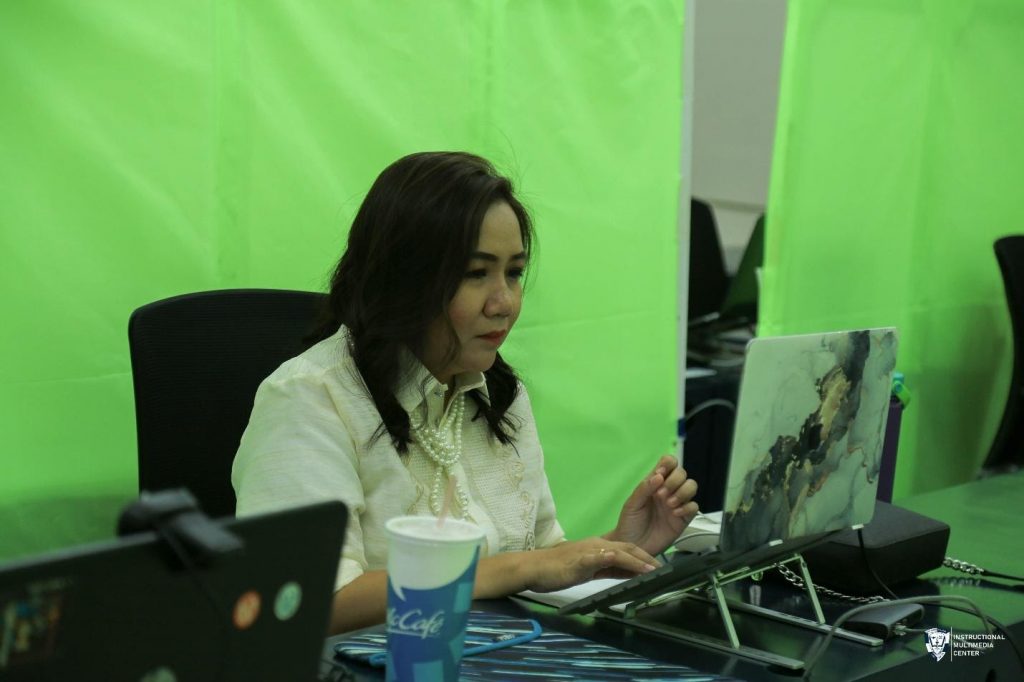
RESEARCH CONVERSATIONS AMID THE ONGOING PANDEMIC CONTINUE THROUGH MADAYAW 4.0
Jasmen S. Pasia, Ph.D. and May Kathryn L. Lazaro
San Pedro College, Davao City, Philippines
San Pedro College (SPC) in Davao City, Philippines, successfully delivered yet another scholarly and meaningful research conference through Madayaw 4.0 with the theme “Conversations in the Post-COVID Era: Lessons Learned and the Way Forward” from 25th to 26th of August 2021 via the Zoom platform. SPC has taken pride in providing quality and meaningful dialogues through this research conference since 2018. This year, Madayaw 4.0 was co-hosted by the City Government of Davao Office of the Vice Mayor, Asia Pacific University-Community Engagement Network (APUCEN), Association of Universities of Asia and the Pacific (AUAP), Department of Science and Technology-Regional Health Research and Development Consortium XI, Quipper Philippines, C&E Bookshop, and CE-Logic Inc.
During the two-day conference, participants heard an insightful and warm welcome from the City Vice Mayor, Hon. Sebastian Z. Duterte, represented by his Chief of Staff Atty. Francis Mark H. Layog; Dr. Peter P. Laurel, President of the AUAP; Dr. Maricar R. Casquejo, Regional Director of the Commission on Higher Education XI; Dr. Ana Julia P. Enero, Dean of Academics, San Pedro College; and Sr. Aida T. Frencillo, OP, President of San Pedro College.
The world is now a year and a half into the COVID-19 pandemic; thus, it is an opportune time to review and share the numerous lessons learned, look at the challenges that remain, share stories of hope, and discuss strategies for moving forward. Top academics, local and international industry leaders, scientists, and policymakers have been invited to share their experiences, expertise, insights, and perspectives as we emerge from the global health crisis.
Prof. Dato’ Dr. Aileen Tan Shau-Hwai, Executive Director, APUCEN, and Professor in the School of Biological Sciences at Universiti Sains Malaysia, delivered this year’s Keynote Address. She challenged the participants to focus on transformative knowledge and stay abreast of acquiring it while connecting people to deal with uncertainties about the future and the hard changes in the world around us. She underscored that the turn-key to transformative knowledge and mindset change is education to produce a future generation nurtured with values-based talent (e.i., entrepreneurial, knowledgeable, balanced) yet relevant to meet 21st-century challenges.
Mr. Antonio S. Peralta, Chairman of the European Chamber of Commerce Philippine Southern Mindanao, presented the Social and Economic Impacts of COVID-19 and a Roadmap to Economic Recovery. He shared his optimism, stating that the economy is expected to recover this year, assuming that the infection curve flattens and domestic demand recovers. Mr. Peralta, speaking for the business sector, stated that the government should maintain its focus on medium-term structural reforms to improve the business environment, support competition, reduce trade costs, and place a strong priority on the transition to economic digitalization.
Hon. Councilor Pilar C. Braga, Chair of the City Government of Davao’s Committee on Education, Science and Technology, Arts and Culture, walked through the response of the Local Government Units (LGUs), highlighting that LGUs are also frontline responders to this pandemic. She also stressed the importance of the local government’s participation in developing national and global policies because they give data and experiences. Councilor Braga further added that while it is critical to convey knowledge about global patterns, local factors are equally critical for developing interventions, approaches, and strategies responsive to present concerns.
Dr. Rajesh Tandon, author and Founder-President of Participatory Research in Asia (PRIA), discussed highlights from his book “Socially Responsible Higher Education.” In his speech, he stated that the world’s experience with climate change, globalization, the challenge of the United Nations Sustainable Development Goals, and the COVID-19 pandemic have all taken on new urgency, raising questions about higher education’s social relevance. He stressed that higher education institutions could play a critical role in a significant transition or civilizational shift to a newly imagined world in this new era of uncertainty and perhaps opportunity.
Dr. MD. Sabur Khan, 1st Vice President, and Chairman, Research and Innovation Committee of the AUAP and the Founder and Chairman of Daffodil International University, Bangladesh, offered initiatives on “Sustainability in Higher Education: Teaching-Learning after COVID-19.” Dr. Khan accentuates the importance of the Academic Bank of Credits (ABC) to promote the flexibility of curriculum structure and academic mobility of students across HEIs. Furthermore, he shared practices in line with Technological Advancement and Disruption: teaching and learning, technology-enhanced teaching, mentoring and counseling, research with impact, online education management, and industry-academic linkage. He challenged universities to strive to be the nucleus for all research collaborations of the academe and industry.
Madayaw 4.0 drew 2,756 participants, including international and local scientists, health professionals, policymakers, researchers, representatives from the private sector, the government sector, academia, development partners, and students. This conference also allowed students and researchers to present their work and innovations through oral presentations and an e-poster competition.
The 130 oral paper presentations were held in 13 different breakout sessions divided into six categories: health sciences, environment, natural and physical sciences, business and management, arts, language, literature and education, and social sciences.
The following papers provided the most compelling 3-minute pitch out of the 22 entries in this year’s e-poster competition: 1st Place – Green Marketing Practices among Food Processing Businesses in Bataan: Basis For Tool Development On Green Marketing Orientation by Adona T. dela Rosa of Bataan Peninsula State University; 2nd Place – The Statistical Drivers of the Time-Varying Reproduction Number of Covid-19 in Davao City, Philippines during the Pre-Vaccination Period: Insights For Policy And Future Pandemics by Zython, Paul Lachica, May Anne Mata, Pedro Alviola IV, and Emmanuel Baja of the University of the Philippines – Mindanao; and 3rd Place – Cybersecurity Across ASEAN: Understanding The Impact Of Social Media Literacy On Governance Future by Stella Anne Ming Hui Teoh and Luke Rong Guang Teoh of Universiti Pendidikan Sultan Idris, Malaysia.
Madayaw is the name of San Pedro College’s Multidisciplinary Refereed Journal; it is a Dabawnon word that translates as everything pleasant, lovely, valuable, and productive–a familiar feeling when one completes research work. San Pedro College is determined to continue the Madayaw Conference as a forum for knowledge and an avenue for the exchange of experiences to generate new perspectives and directions for a more hopeful and productive future.
Dr. Md. Sabur Khan as resource speaker during Madayaw 4.0 held last 26 August 2021 via Zoom (Photo from the International Affairs, DIU Facebook Page)
Prof. Fatima May R. Tesoro, Dean of the Pharmacy Department of San Pedro College, facilitated the session.
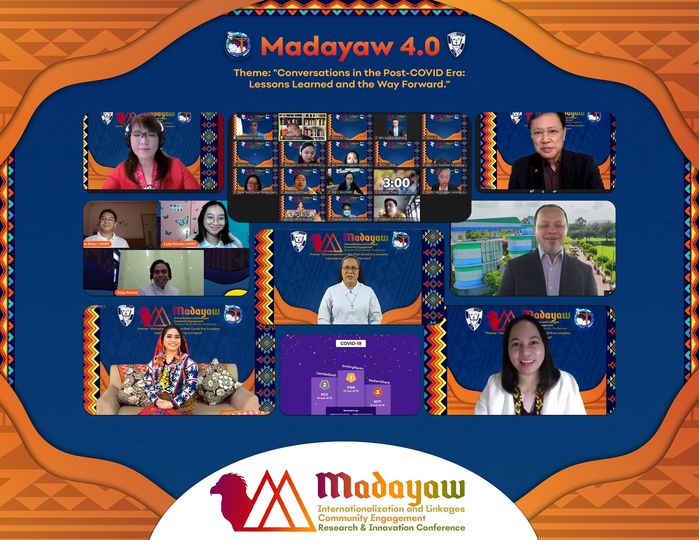
As the inevitability of change compels continuous discovery and research, it signals an avenue for discussion of ideas, experiences, practices, and results.
On the fourth installment of its Internationalization, Linkages, Community Engagement, Research and Innovation Conference, San Pedro College charges towards the current barrier unfazed. Madayaw 4.0, the second virtual conference organized by the institution, bolstered scholarly exchanges of innovative breakthroughs – transcending beyond conventional platforms for research presentations.
LOOKING BACK
The Madayaw Research Conference was the fruit of the brilliant mind of the late Dr. Desiderio N. Noveno Jr. On its first stretch, Madayaw garnered a total of 150 paper presentations in the area of education, health, natural science, business and economics, and social sciences, with a total of 404 research delegates all over the country and the world.
Consequently, the success of the conference paved the way for Madayaw 2.0. Held at the Apo View Hotel Davao last August 14-15, 2019, Madayaw came back with 492 participants and 120 paper presentations. And in its third year, a resounding 1,408 researchers all around the Philippines and the rest of the globe participated despite being held virtually in the history of Madayaw due to the public health crisis.
Continuing its commitment to deliver a quality and relevant research forum, the Madayaw International Multidisciplinary Conference recommenced stronger in its fourth year, focusing more on global linkages and community participation, together with multiple partnerships.
LEVERAGING SINCE ‘18
Madayaw 4.0 is open to the public with free registration in line with San Pedro College’s 65th Anniversary. In collaboration with the City Government of Davao City Office of the Vice City Mayor, Asia Pacific University- Community Engagement Network (APUCEN), Association of Universities of Asia and the Pacific (AUAP), Quipper Philippines, C & E Bookshop, and CE-Logic Inc., the conference’s groundwork was quite a challenge to its organizers.
“We began coordinating with potential sponsors for the event in January of this year. Because this is the second virtual conference, last year’s lessons served as a springboard for making Madayaw 4.0 better. The working committees held series of meetings to delegate tasks and roles, identify funding sources, how to market, and to carry out the entire conference,” Ms. Jasmine S. Pasia, PhD, Co-Chair of the Madayaw Conference said during a virtual interview with The Petroglyphs.
Furthermore, Ms. Pasia warmly added how the efforts of the working committee paid off. Right after, the committee received emails of praises from the conference participants for a smooth and excellent run of the research forum. “It was a team effort. We bring back all the glory and honor to God, for His guidance and sustenance.”
THE LEGACY CONTINUES
Since 2018, the international research forum has been a conducive platform for researchers to be heard and discover their analysis. From business model development to addressing teaching pattern insufficiencies and exploration to living clean green, a variety of researches indeed come around every year at the Madayaw.
“So I have in my mind that I can pick somehow, some points that he can taught us as educators. I’ve got learnings from him [Dr. MD. Sabur Khan] on how to intensify teaching research especially it’s online set-up,” Ms. Zarine Cabugsa expressed the impacts of the conference to her during the live interview of The Petroglyphs.
Dr. MD. Sabur Khan, one of the speakers on the second day of the event, discussed “Sustainability in Higher Education: Teaching-Learning After Covid-19.” Ms. Cabugsa’s sentiments on how she can apply as an educator to what she encountered during the conference is a small representation of the relevance and impact of the annual research conference.
Madayaw’s fourth chapter, despite the considerable amount of limitations, has ironically performed well in an interesting and convenient way, as researchers can present their works in the comfort of their homes.
Moreover, two of SPC’s organizations- The Petroglyphs and Directors’ Cut- have worked hand in hand to publicize the event. Through this, not only the research participants can look back to their notable experience, but onlookers everywhere can witness how complex researchers become a gateway to global change.
The Madayaw Research Conference not only became the institutions’ ongoing legacy but an accolade that will always be evoked annually for providing an outlet for researchers to be heard and discovered in hopes of changing the world. As what the Dabawnon term “Madayaw ” suggests – the beautiful, valuable, pleasant feeling when one accomplishes research. Indeed, researchers and participants would go home feeling valued and anticipate the next Madayaw with a sense of pride.
Glyph-on-duty: Aika Rosete
Layout by: Desiree Veneracion
The Petroglyphs – The Official Campus Media of SPC Senior High School

“Madayaw” is a Dabawnon term that refers to having a considerable worth to someone—a constructive feeling towards a researcher’s masterpiece.
The 4th Madayaw Internalization and Linkages, Community Engagement, Research, and Innovation Conference, is once more anchored by the San Pedro College, as it circled the theme: “Conversations in the Post-COVID Era: Lessons Learned and the Way Forward.” The Madayaw 4.0 was open to the public at no cost; thus, approximately 1,700 people were in attendance.
San Pedro College’s President, Sr. Aida T. Frencillo, O.P.; and the President of the Association of Universities of Asia and the Pacific (AUAP), Dr. Peter P. Laurel, were on hand to launch the Conference’s final day.
During the keynote address, Professor Dato’ Dr. Aileen Tan Shau-Hwai, Executive Director of Asia-Pacific University-Community Engagement Network (APUCEN), has put into words an eye-opener that the participants must reflect on, “The world is changing and will continue to change whether we are prepared or not prepared, or whether we like it or not.”
The latter part of the morning session was about choosing between the topics discussed by two speakers of concurrent sessions, where Dr. Rajesh Tandon, Founder-President of Participatory Research in Asia, tackled how higher education adapts and changes for the learning of students. Dr. Tandon indicated that the only way to produce active, responsible, and thoughtful young people; is when teaching is viewed from a student’s eyes.
Meanwhile, the second Vice-President of AUAP, Chairman of the AUAP Research and Innovation Committee, and the Chairman of the Daffodil International University in Bangladesh, Dr. MD. Sabur Khan, set his viewpoints on the sustainability of higher education in terms of maintaining the quality of teaching and learning, following the COVID-19 pandemic.
In a profound exchange of dissected insights, the delegates of the Madayaw 4.0 displayed multiple kinds of research in 13 designated breakout rooms for the afternoon session.
Conference participants had the opportunity to choose among various sessions to learn from. Among the topics covered were: Health and Medicine; Environment, Natural, and Physical Sciences; Business and Management; Arts, Language, Literature & Education; and Social Sciences. Following the presentation of the studies, open forums were held for researchers to exchange ideas and broaden their scope of knowledge and for educators to propose amendments.
The last day’s event was out on the rise fulfilling its purpose: to make an effective platform for sharing knowledge, experiences, and innovation breakthroughs. The Conference’s definition of “change” influenced this year’s event, as well—for change precedes advancement, and becoming a source for global development would require only a single step to begin. Thus, instead of being reluctant because of the complexity of conducting research, consider how fulfilling it would be to complete a paper that can answer questions, solve global problems, and somehow change the world.
Indeed, the forum has left behind masterpieces that have impacted students, practitioners, educators, and most remarkably, the researchers who gave the “Madayaw” feeling to the two aforementioned.
Glyph-on-duty: Vianca Gipala
Layout by: Benjamin James Franklin Marapon
The Petroglyphs – The Official Campus Media of SPC Senior High School
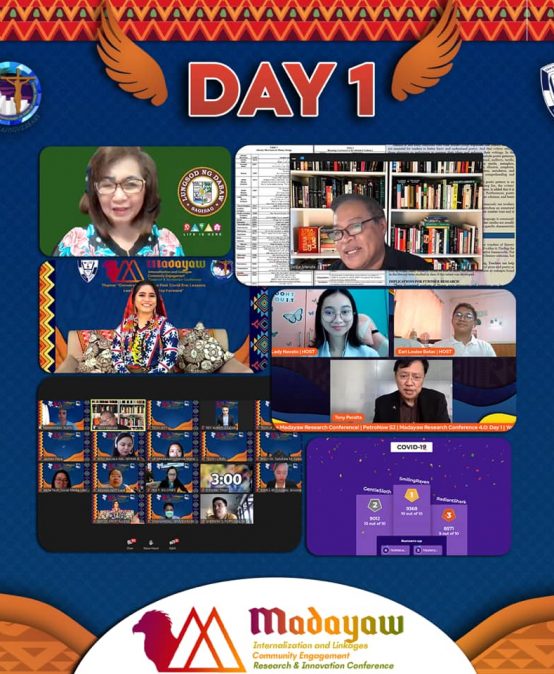
Today marks as a stepping stone towards the future as researchers and participants celebrate the 4th Madayaw Internalization and Linkages, Community Engagement, Research, and Innovation Conference with the theme “Conversations in the Past Covid Era: Lessons Learned and the Way Forward” hosted by San Pedro College. Attended by over 2,400 participants, guests, and speakers, Madayaw 4.0 became a movement promoting researches and inspiring researchers nationally and internationally.
Despite the pandemic, the need to rise beyond the situation is encouraged, working collaboratively to lessen the risk and solve problems. Government officials, scientists, medical workers, and researchers, making the most of the current situation, are working together to find solutions and help the country. The role of Madayaw is significant as it provides a platform to share researches and studies that can be useful to others.
The day started early with Preliminaries followed by Welcome Addresses from three highly notable persons in Davao City: Dr. Maricar R. Casquejo, CESO III, Dr. Ana Julia P. Enero, and Davao City’s Vice Mayor Sebastian Z. Duterte. Speaker Antonio S. Peralta talked about the Social and Economic Impacts of Covid-19 and the road map to recover economically, while Hon. Councilor Pilar C. Braga talked about the LGU Perspective during this pandemic, giving insights and ideas that needed to be learned.
Various talented researchers from the Philippines and Malaysia have presented their creative e-Posters about their respective researches. A total of 22 presenters have been allowed to showcase their studies with a chance to be acknowledged and win. Various research presented paved the way for present-day society to innovate and move forward considering the past knowledge. The openness of ideas in every research allowed the participants and the audience to experience knowledge and creativity that can enhance and inspire an individual’s interest.
As people celebrate the culmination of an enormous collective effort created by researchers, a milestone has been reached through the communication of various researchers of today. Carrying the dedication and commitment to every work that needs to be done can put society’s and the researchers’ vision into reality. It is crucial to seize opportunities to hone skills and teach new learnings, like Madayaw, to open new doors and paths. Today is a great way to genuinely capsulate the true meaning and purpose of research and what it is all about.
Glyph-on-duty: Kyrie Eleison Empig
Layout by: Karylle Maxine Cornejo
The Petroglyphs – The Official Campus Media of SPC Senior High School


Copyright © 2025 San Pedro College, All Rights Reserved. SPC Official Website.
| Terms and Conditions | Data Privacy Statement | Privacy Notice |
| Cookie | Duration | Description |
|---|---|---|
| cookielawinfo-checbox-analytics | 11 months | This cookie is set by GDPR Cookie Consent plugin. The cookie is used to store the user consent for the cookies in the category "Analytics". |
| cookielawinfo-checbox-functional | 11 months | The cookie is set by GDPR cookie consent to record the user consent for the cookies in the category "Functional". |
| cookielawinfo-checbox-others | 11 months | This cookie is set by GDPR Cookie Consent plugin. The cookie is used to store the user consent for the cookies in the category "Other. |
| cookielawinfo-checkbox-necessary | 11 months | This cookie is set by GDPR Cookie Consent plugin. The cookies is used to store the user consent for the cookies in the category "Necessary". |
| cookielawinfo-checkbox-performance | 11 months | This cookie is set by GDPR Cookie Consent plugin. The cookie is used to store the user consent for the cookies in the category "Performance". |
| viewed_cookie_policy | 11 months | The cookie is set by the GDPR Cookie Consent plugin and is used to store whether or not user has consented to the use of cookies. It does not store any personal data. |